
A Brief History of the FiddleStick
Developing the FiddleStick was very much a group project, though I do claim credit as the driving force behind it, being the 'equipment person'.
The Spark
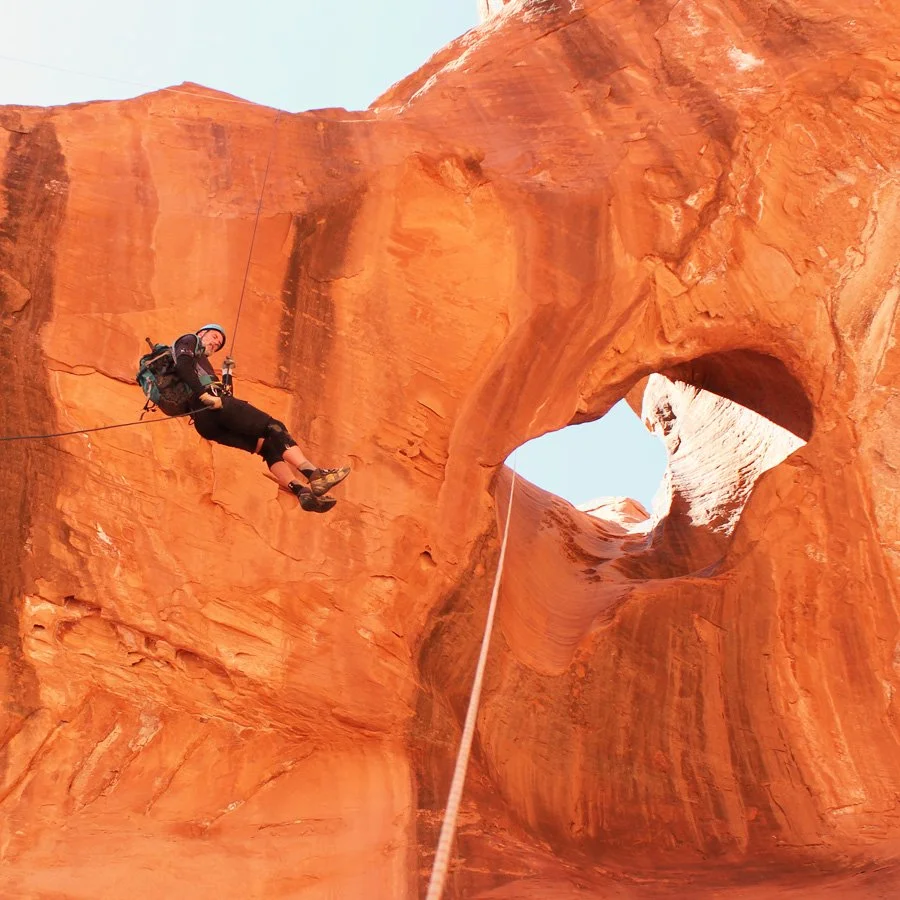
The year was 2011, March 12th actually. We were doing a rest-day hike/rappel canyon partly to go look at a very large arch that Scott Patterson had noticed in Marinus Canyon, North Wash area, Utah. At the top of the canyon, we found the arch, with a spacious flat top about 30 feet down from the rim. We needed to do a short rappel to get to the top of the arch.
- Ghosting is a style of canyoneering where nothing is left behind when you descend a canyon. A wilderness ethic calls for the least human intrusion into the wilderness that allows for safe passage; to this point in canyoneering we interpreted this as a few short pieces of webbing, and as a last resort bolts when absolutely necessary. But is it possible to leave nothing behind?
- Dave Black had worked on this project for a while, what he called "Clean Canyoning". He came up with the Omnisling and a way to use that - which I and a few other engineer-types glommed onto, but that did not become popular. The Macrame was tried; I had one get stuck as in not-release and realized it depended on rope-on-rope friction, hold and release -- an inherently unreliable system. The hold was good, the release was iffy.
I already had a plan for how to do the Arch leaving nothing behind, and NOT pulling the rope over the arch (as people had been doing, leaving rope grooves on the rock). But here we were, 30 feet above the enticing arch, and we needed an anchor. There was a sturdy enough small arch in a perfect location. Instead of slinging the small arch, I tied a foot long loop of rope and poked it through the arch, and stuck Ram's trekking pole through it on the other side. The arch was small, the bending force on the pole would be small. We rappelled down, pulled the pole out with another piece of rope and retrieved the rappelling line. Crude, but... The question became, was there a way to do this in general, ideally with the rappel rope coming down with no knots, clean.
Buffy the Vampire Slayer
Back home, I looked for what would make a good stake, to take the role of Ram's ski pole. Zion Adventures used these 1-1/4" round hardwood hiking sticks that came with a pointed end. At the bottom of the back stairwell there was a pile of discarded cutoffs -- I picked up a few to try out. As a Buffy fan, I thought it would be fun to use Vamp stakes for our tool.
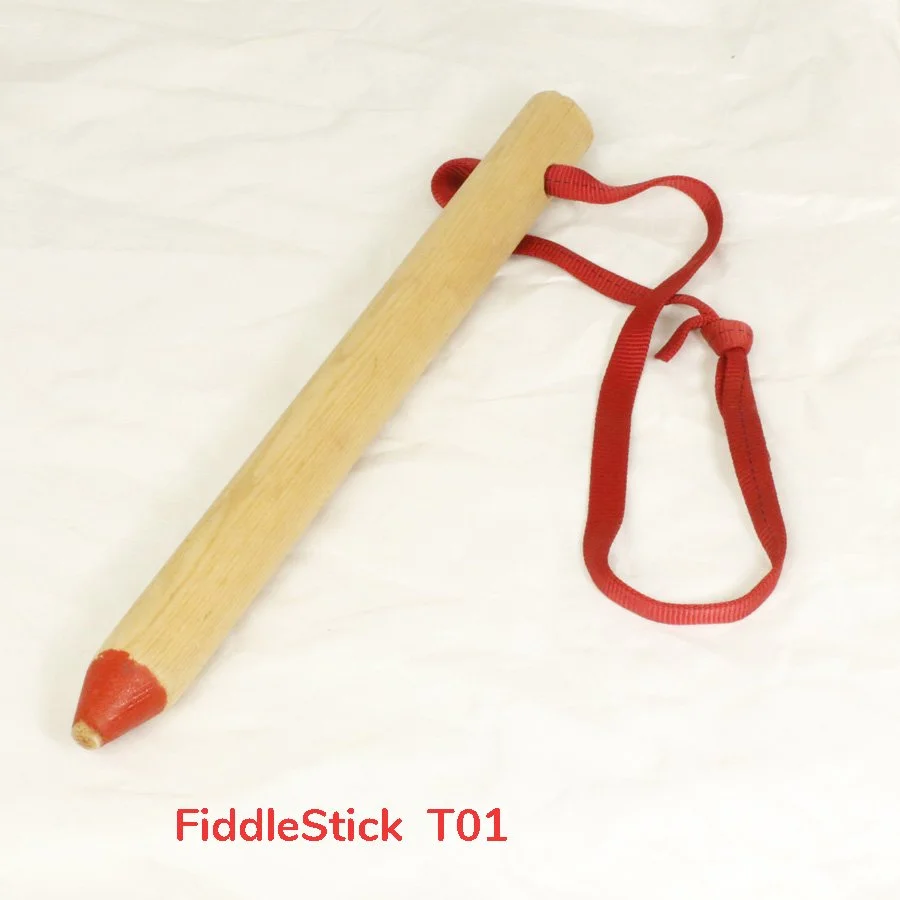
Then the problem became HOW to use it. A few raps were done from trees using the stake across a rapid link tied to the rappel rope, and this worked okay when the drop was clean. But not the best.
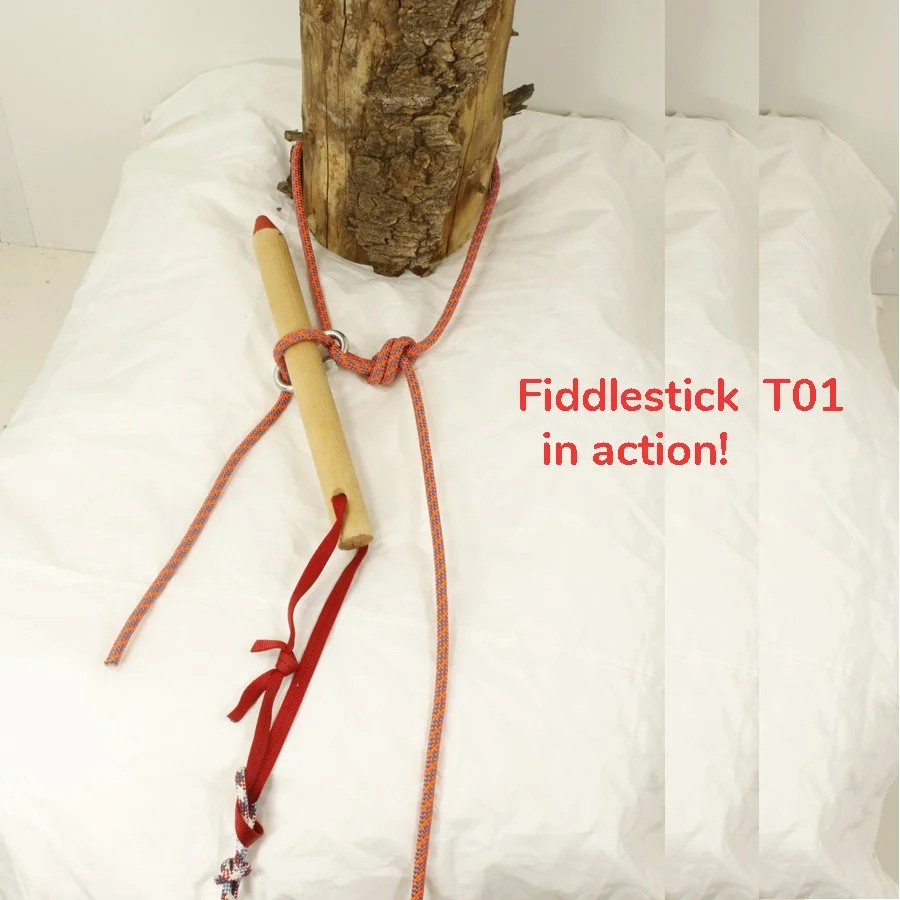
The Stone Knot aka Marlin Spike Knot (ABOK 559)
A few years before, the Stone Knot had come into use for canyoning as a way to secure a rope and have both strands be usable. Luke's history of the Smooth Operator remembers the first big breakthrough:
"May 2011 -- Steve Fisk made a post on the Yahoo Canyoneering Group asking if anyone had played with using a pin in a Stone Knot instead of a carabiner. The title of the thread was Stein Knot Rigged for Remote Release. A handful of people contributed to the thread discussing things like stick size, stick material, effects of how the stein knot was tied, adding pull cords and various placements for safety pins."
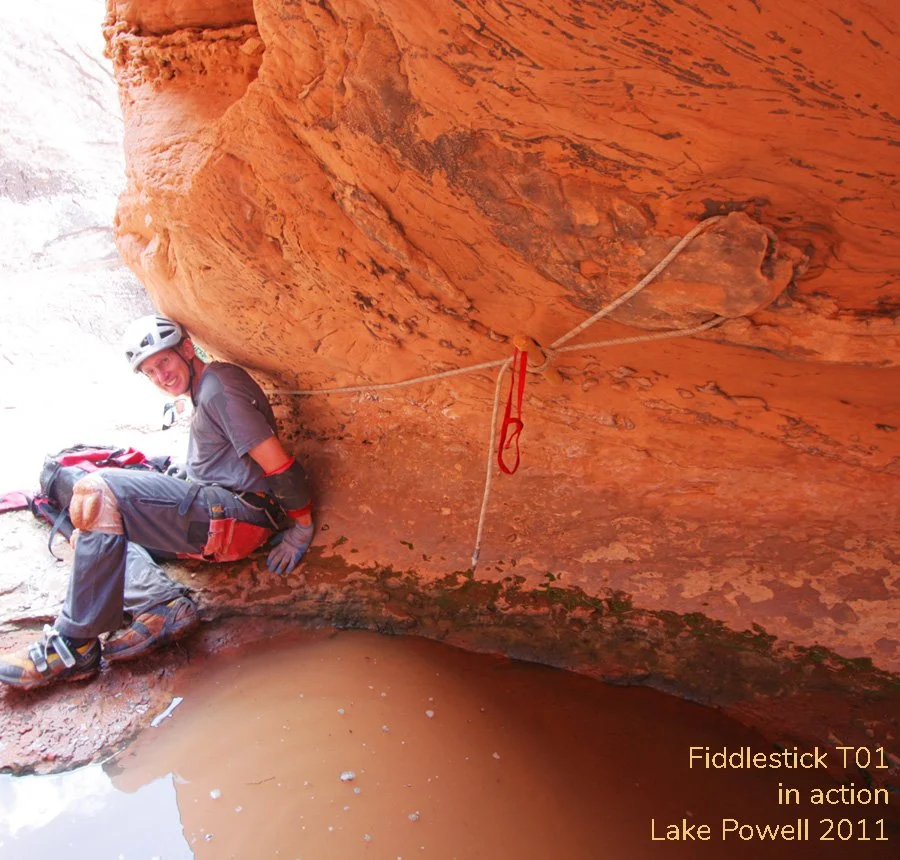
Discussion ensued. I took my Buffy Stakes out into the wild and tried a few things -- it worked! We took it out on Lake Powell where it was quite useful, and I learned how to make it not work. Around a big rough rock, the roughness prevented pulling. In another canyon, draped around the back of a rock, the rope dug in underneath the rock and declined to be pulled. The killer for the Stake was the one where the peg got wet, the wood grain raised up and tenaciously clung to the rope. On this trip Drue Kehl came up with the name "FiddleStick"! Genius. Thanks Drue.
T02 Aluminum Pole
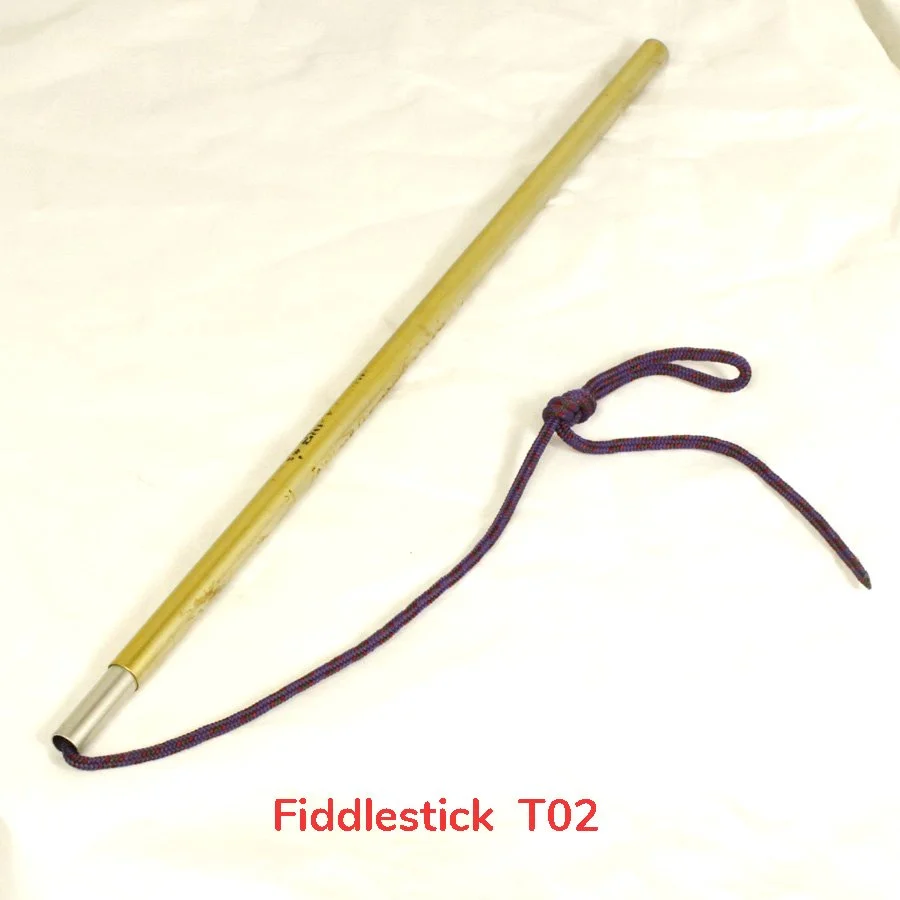
I had plenty of aluminum pole segments left over from the Happy Hooker. These are surplus avalanche probe poles from BD, not tent poles. Half-inch diameter: Strong; Small; Slippery; and too long. Spooky, they were. We used them on a few canyons, but this was clearly not the way to go.
Come here often, Sailor?
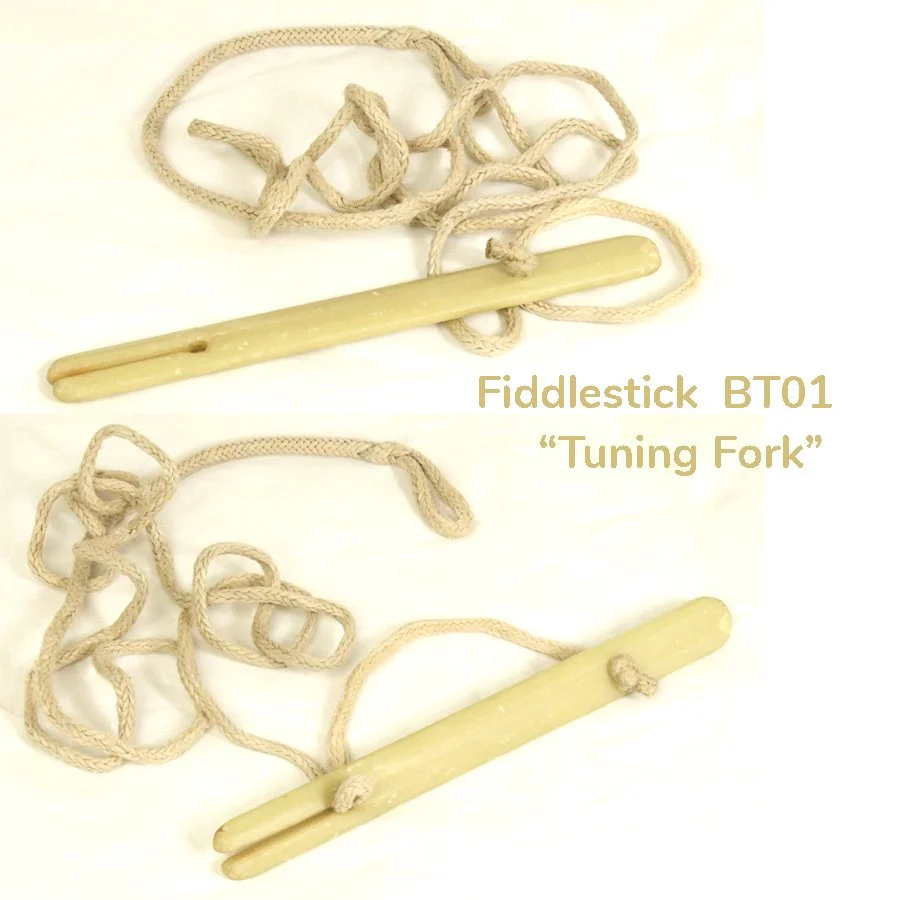
May 2012 - Brendan Busch picked up the project. Brendan is an excellent and enthusiastic canyoneer; his primary sport is competitive sailing, and he had a pile of broken/used sail battens behind his garage, and the tools to make them into Fiddles. Battens are fiberglass sticks made to be very stiff in the long direction. A good choice. Brendan's workmanship was also very good. He made up a big handful and handed them out to friends. People used them.
BT01 "tuning fork" version had a safety-device - a carefully sized hole that required a quick pull to release, allowing for the stick to be pulled out. After a couple hundred uses, we decided the "safety" was not needed / more trouble than it was worth. Brendan introduced us to the UHMWPE cord called Amsteel, which he used as a 'leader' and spliced both ends.
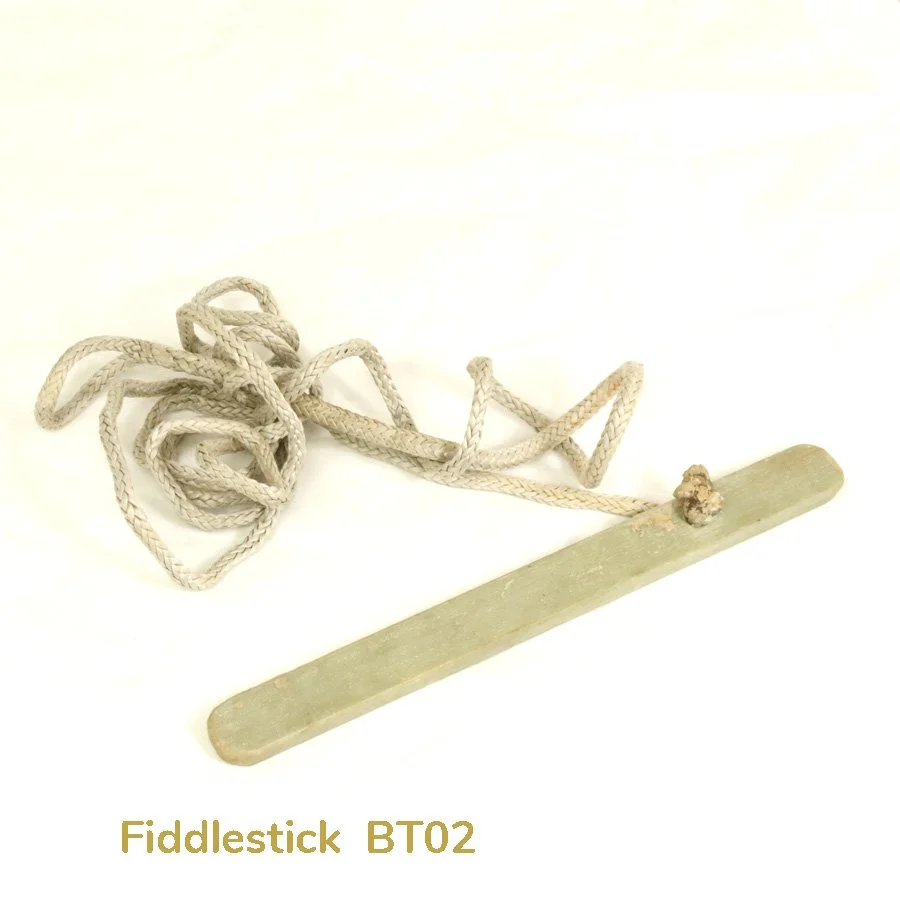
BT02 was just a plain batten stick and ended up being quite popular. The general size and thickness seemed right, and that spring and summer there were perhaps as many as 1000 Fiddle rappels completed.
(The leader-style string on the Imlay FiddleStick is a continuation of the way Brendan strung his up. I use 3mm perlon and knots enclosed in heat shrink tubing because I have no wish to spend my evenings splicing amsteel.)
What to make it out of?
Certain 'inventions' once achieved seem obvious. Perhaps this is one of those. But certainly, when Luke Galyan in August 2012 made up some using polycarbonate it was "Well, Duh!" Low Density, inexpensive, strong, stiff and tough. Kinda like clear aluminum. Polycarbonate is the perfect material.
It seemed like a rather obscure tool, so I considered just leaving it as a craft project... but even now people make Toggles (the generic name) out of many different materials, including unsuitable ones. I figured it was worth making up a batch for the 20 or 30 people who would want one. I found a friend who worked with plastic and thought it would be fun to make blanks for me, and in March 2013 we released the first production FiddleStick(TM) to the masses. It was a hit, and still is.
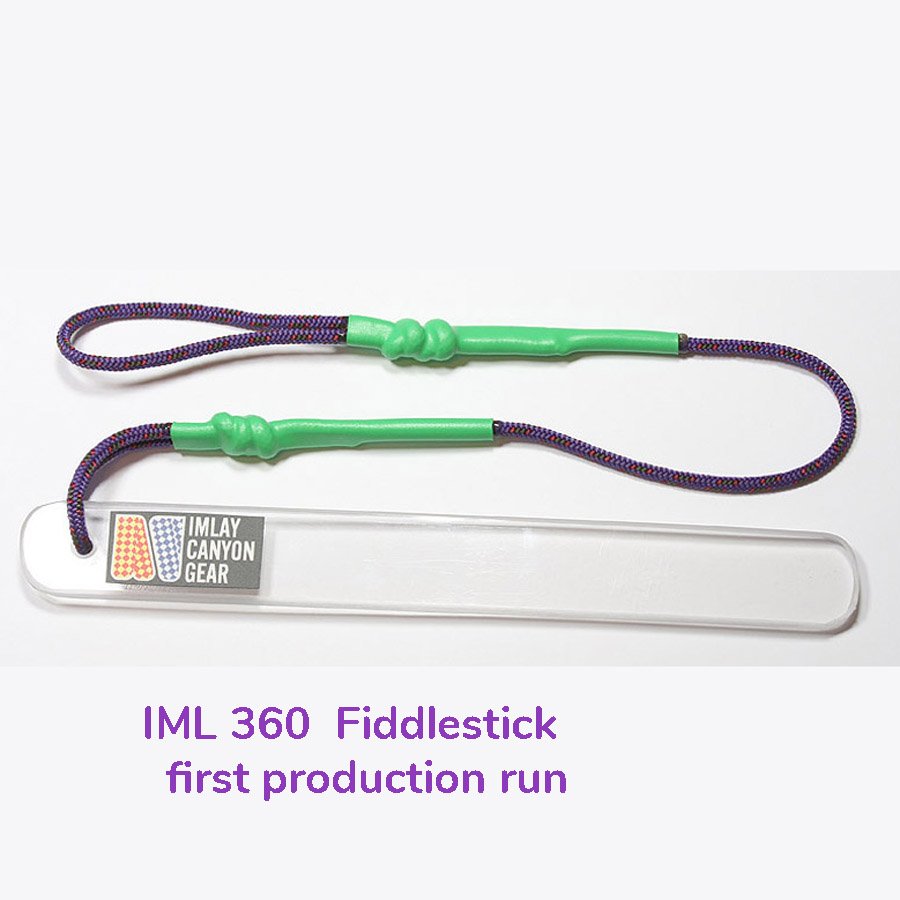
Luke introduced his Smooth Operator version about a month later using thicker Lexan, and I switched to that thickness on the next batch. FiddleSticks and Smooth Operators have become a popular advanced tool for canyoneers doing non-flowing canyons. Very much a group project - thanks to all that participated.