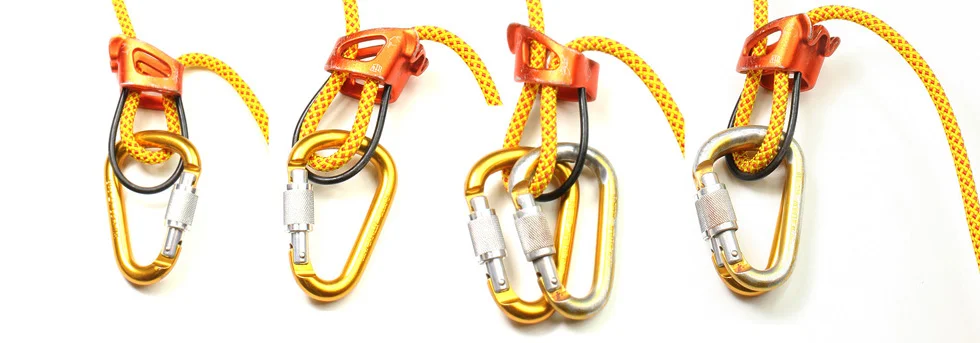
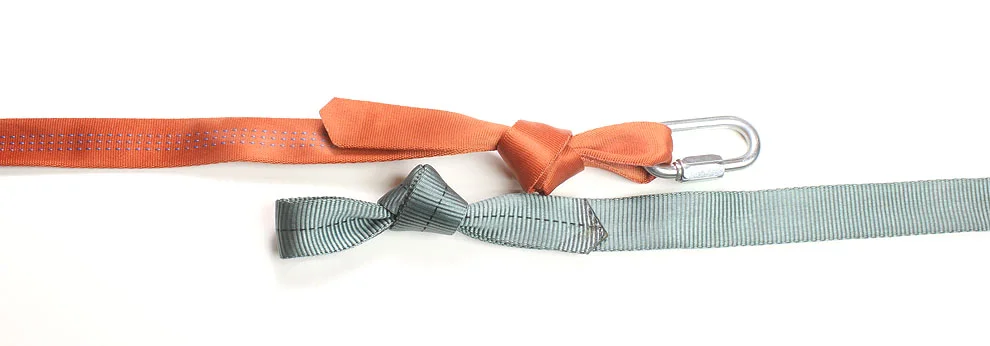
What you are looking for are Rapid Links (aka Rapides, Quick Links, Maillon Rapide, Links). Available in many styles and sizes. The cheap ones, as above, are junk, meaning, they have no brand name on them, and their quality varies widely... and they are not really made for life-safety applications. These no-brand rapides are often referred to as "Pacific Rim", and are available at Home Deport, Harbor Freight, etc... I recommend against using non-brand-name hardware for life safety applications. I sell Rapides made by a French company with excellent quality control called Maillon Rapide. …
Perhaps the most common rigging set-up in high-traffic canyons, such as you'll find in the Zion area, the following is the "Standard Rigging" for a two-bolt anchor. EQUALIZED, TIED OFF RIGGING FOR TWO BOLTS
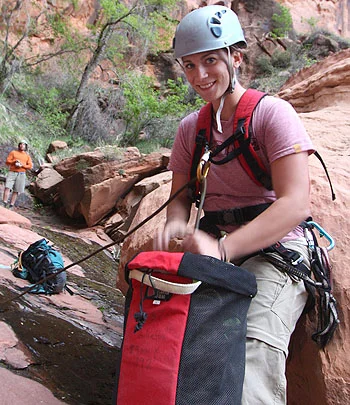
Ropebags make deploying ropes in canyons simple and efficient. Additionally, they help in transport and storage, but really, where they shine is in letting you get the rope out and set up quickly and with minimum hassle.
Cold hands, cold feet? When out in the wild, in the cold, some people have trouble keeping their hands and feet warm and functional, and some people don't.
It is a new approach to retrievable anchoring, opening up a wider range of possible anchors, and making it possible to descend more canyons while leaving nothing behind (aka “ghosting”).
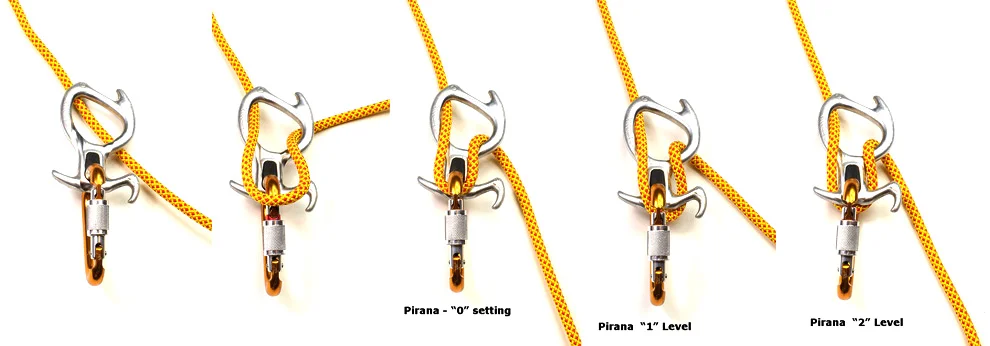
The Petzl Pirana is a Figure Eight based rappel device made specifically for canyoneering. It has several friction settings, so the correct friction for the rope/canyoneer/situation can usually be found…
"Retrievable Anchors" are those where the webbing used to form an anchor is retrieved, leaving nothing behind. There are several good reasons for doing this including:
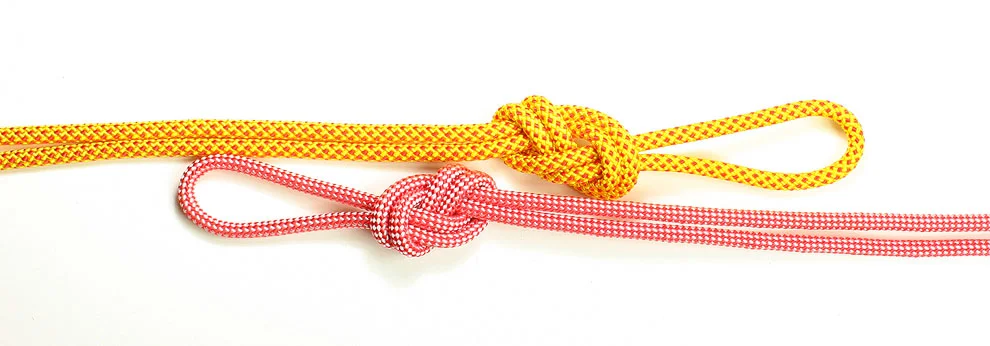
OVERHAND ON A BIGHT The other "most-useful" knot in webbing is another overhand-type, the Overhand on a Bight. This is tied in webbing just as it is in rope.
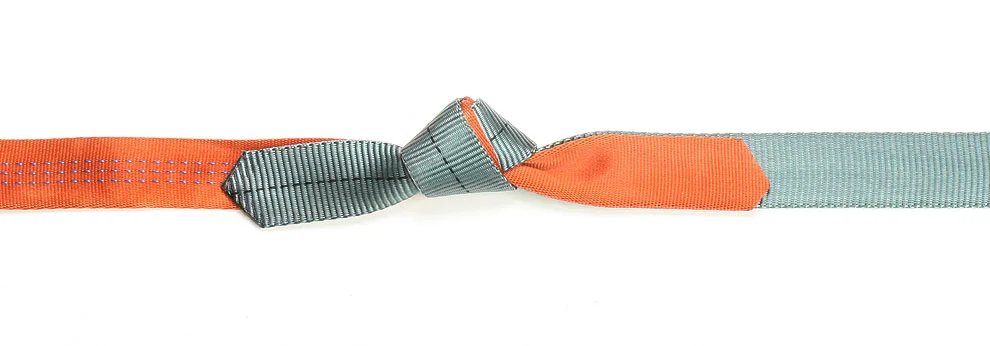
As a prelude to Water Knot instruction, a bit of mountain wisdom from Edward Whymper is appropriate: "There have been joys too great to be described in words, and there have been griefs upon which I have not dared to dwell…
Sometimes it is a good idea to tie a harness from a length of webbing. Canyons in North Wash often only have one or two rappels, so a temporary webbing harness works well there. Sometimes your partner will goof up and forget his harness…
Ghosting is the art of descending a canyon and leaving nothing behind. Ghosting techniques are used in selected places where leaving no visible anchors has a benefit.
"To me the simple act of tying a knot is an adventure in unlimited space. A bit of string provides a dimensional latitude that is unique among the entities." ~Clifford W. Ashley,
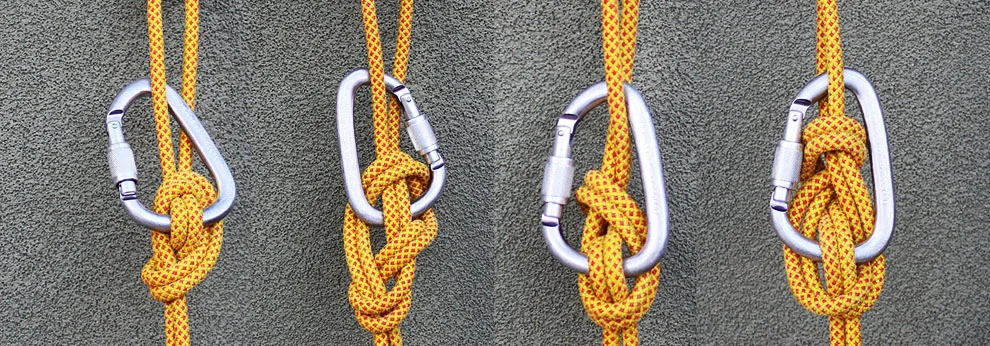
Knowing how to rig a carabiner block (biner block) and pull cord allows for retrievable single-rope rappels, creating several advantages for the backcountry canyoneer.